
Passive whale watching in Loreto is rooted in science, conservation, and ethical wildlife observation
Loreto Bay, Baja California Sur, is one of the most important winter refuges for whales and cetaceans in the Gulf of California, providing essential feeding, nursing, resting, and socializing habitat for blue whales, humpback whales, fin whales, bryde’s whales, dolphins, and occasionally orcas. Of the approximately 3,000 blue whales in the Northeastern Pacific population, an estimated 350 spend their winters in the Gulf of California, with nursing mothers and calves showing particular preference for the protected waters of Loreto Bay National Park.
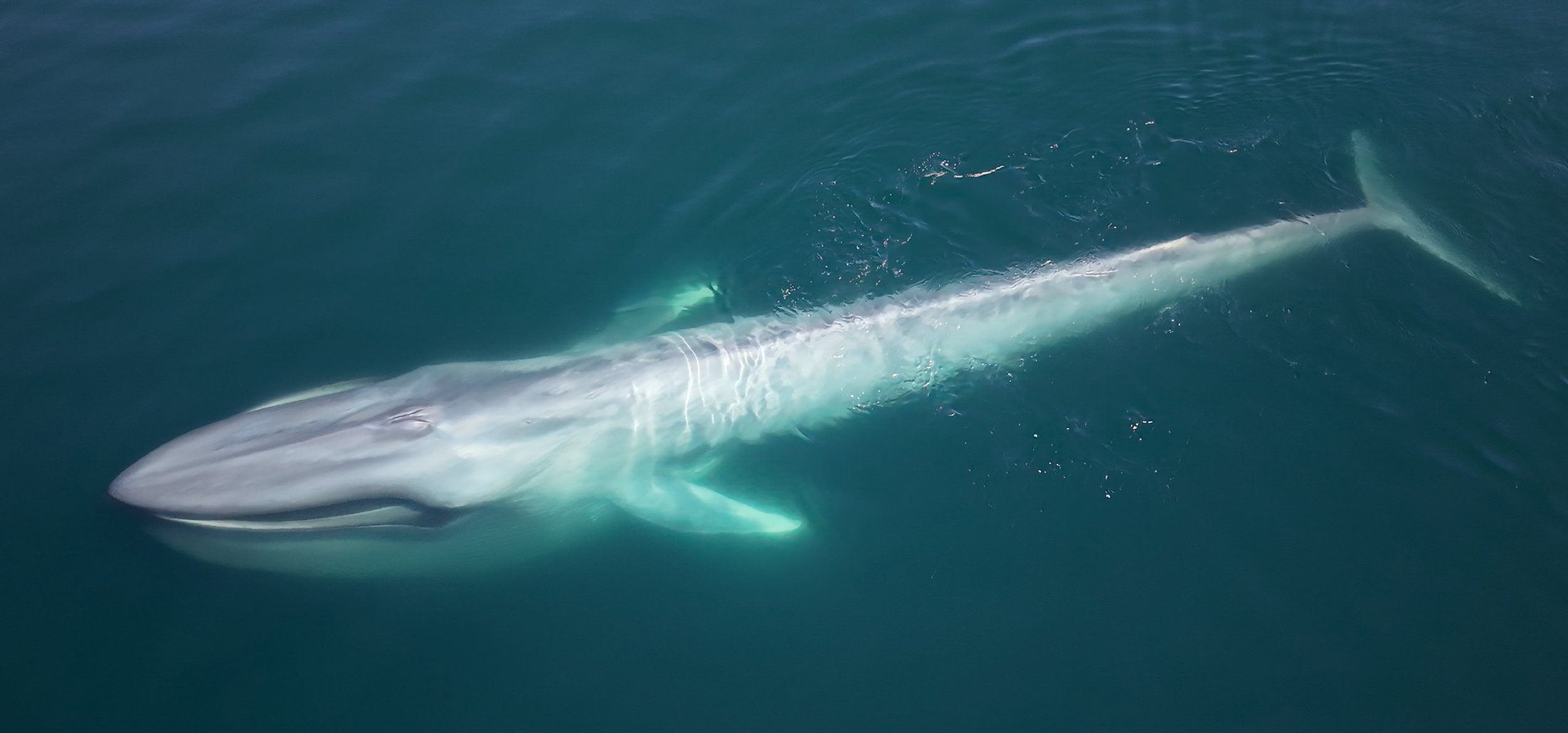
At Baja Adventures and the Nakawe Project, our regenerative tourism expeditions are based on a low-impact method known as passive whale watching.
This ethical approach allows whales to choose the interaction while minimizing disturbance.
Our boat approach slowly, maintain respectful distances of generally more than 100 meters, turn engines off whenever possible, and drift silently instead of actively pursuing whales.
Females with calves are never followed, ensuring mothers can rest and nurse undisturbed during a critical stage of migration.
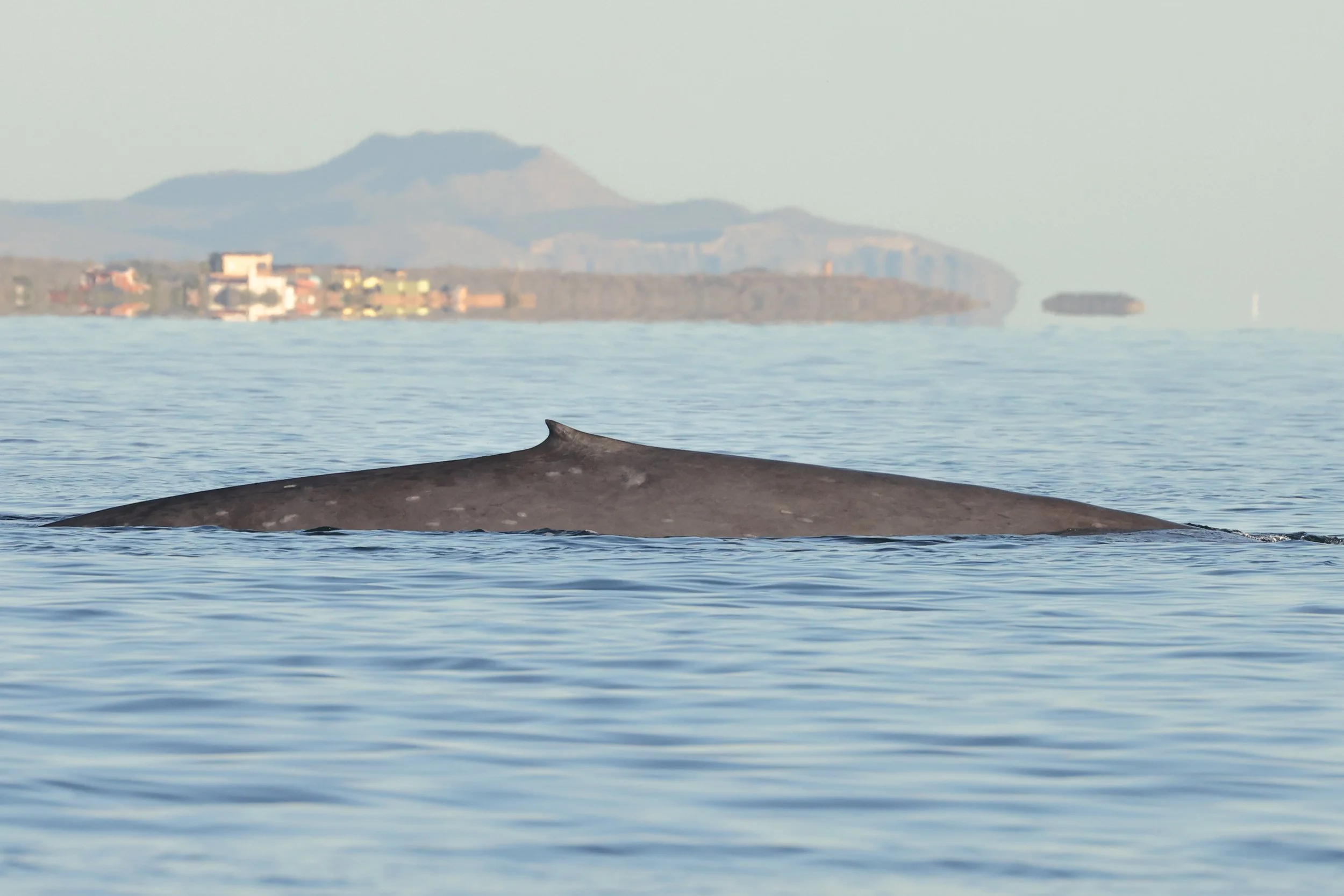
Photo of a blue whale dorsal fin by Regina Domingo, Nakawe Project founder and expedition leader, during a Loreto winter 2026 whale-watching citizen science regenerative tourism expedition.
This approach was strongly influenced by the work of marine biologist Dr. Diane Gendron, who conducted long-term blue whale research in the Gulf of California between 2009 and 2016. Her team tracked 148 individual blue whales and collected more than 646 hours of behavioral data. Their research demonstrated that active whale-watching vessels altered whale behavior, reducing surface time and shortening dive durations. However, when researchers maintained distance and turned engines off, whales often approached vessels voluntarily and behaved more naturally. These observations contributed to the development of what became known as passive whale watching.
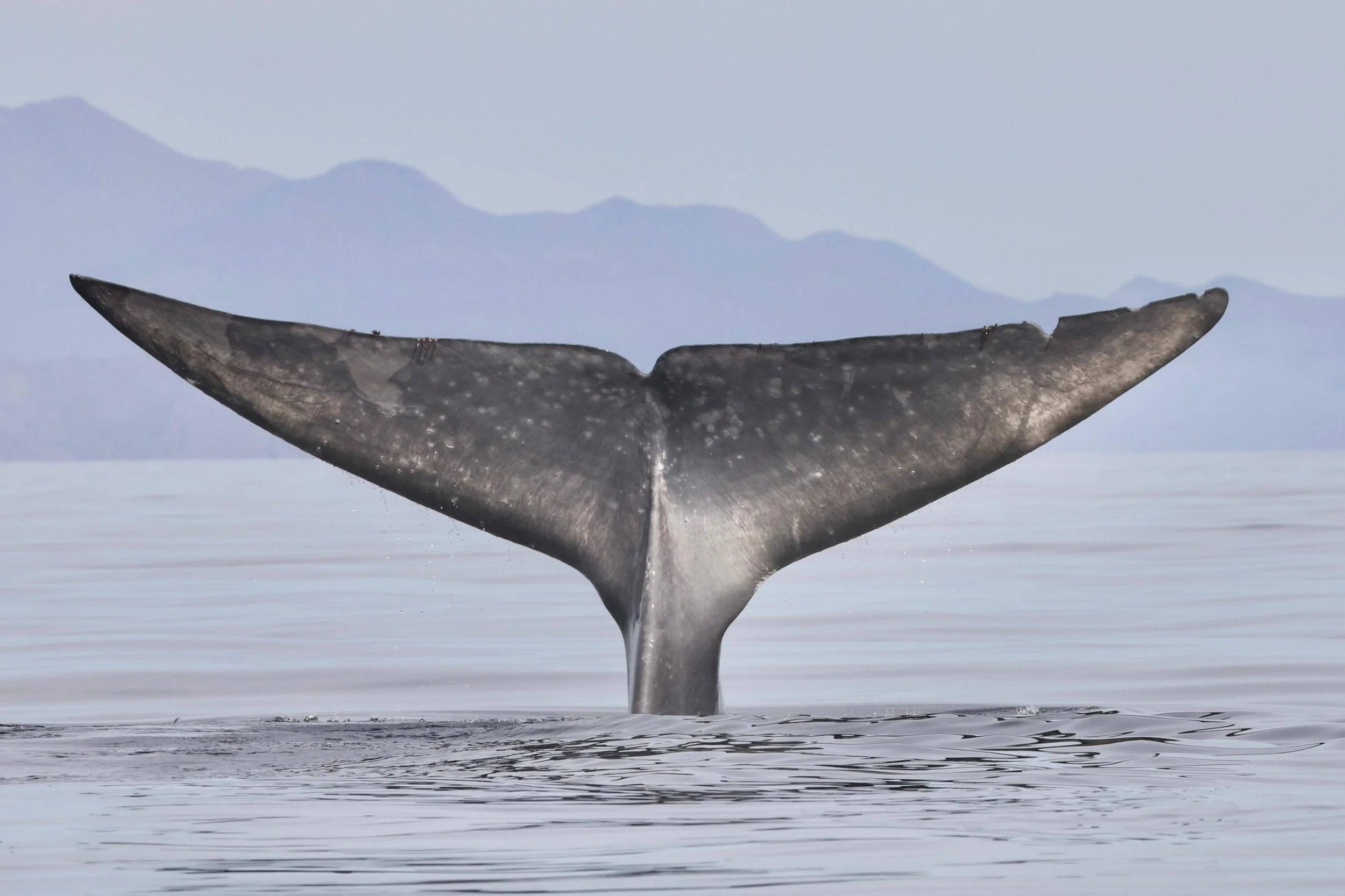
Photo of a blue whale fluke by Regina Domingo, Nakawe Project founder and expedition leader, during a Loreto winter 2026 whale-watching citizen science regenerative tourism expedition.
Scientific studies around the world support low-impact whale observation methods.
Williams et al. (2002) documented avoidance behavior in humpback whales exposed to motorized whale-watching vessels.
Bejder et al. (2006) found that chronic vessel disturbance caused stress and displacement in cetaceans and could affect reproductive success. Lusseau (2003) demonstrated that quieter observation methods reduced behavioral disruption in bottlenose dolphins.
Tyack (2008) showed that vessel noise interferes with whale communication, feeding behavior, and navigation.
McDonald et al. (2006) found that blue whales may reduce feeding activity and abandon feeding areas due to vessel noise.
Weilgart (2018) documented the effects of chronic underwater noise on cetacean communication and hunting efficiency, while Foote et al. (2004) observed changes in orca communication and hunting behavior in areas with high vessel traffic.
Together, these studies consistently show that reducing vessel disturbance and underwater noise is critical for whale conservation.
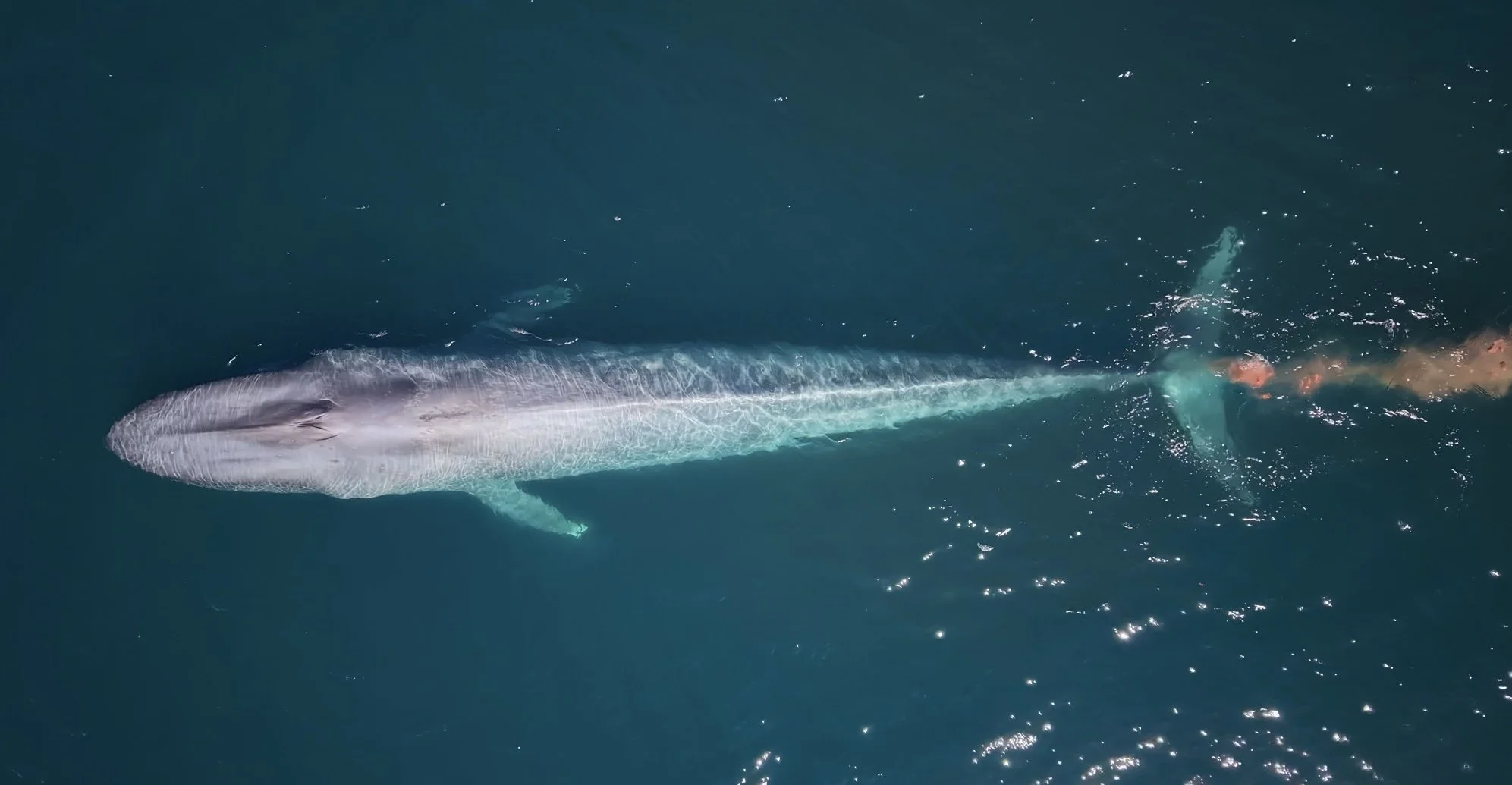
Blue whales are especially sensitive to noise because they rely on low-frequency sound to communicate across vast distances, locate feeding grounds, coordinate reproductive behavior, and navigate migration routes. Loreto functions as a globally important winter feeding and nursing refuge for these whales, making the protection of this habitat essential for their survival and recovery.
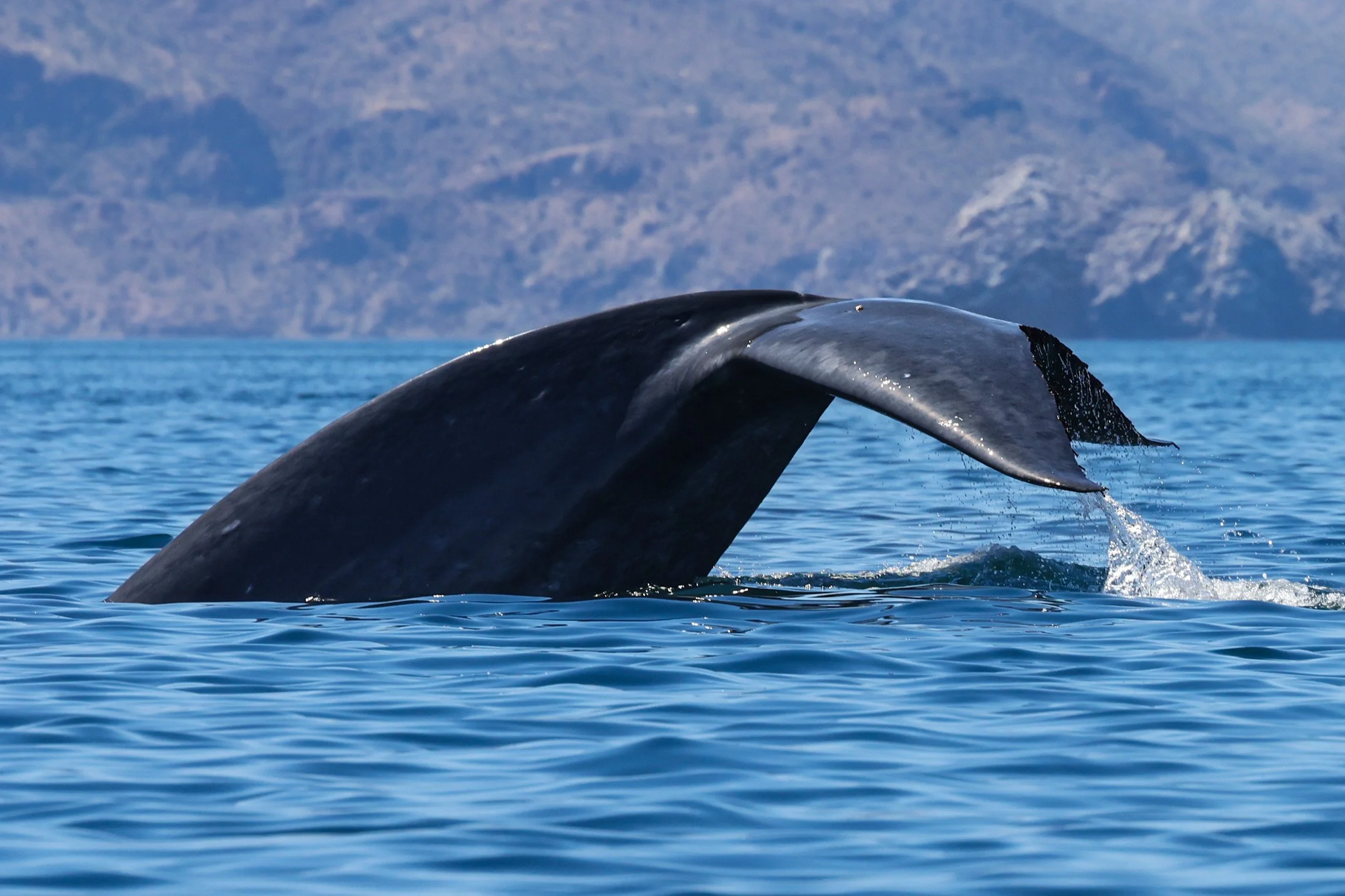
Photo of a blue fluke whale by Regina Domingo, Nakawe Project founder and expedition leader, during a Loreto winter 2026 whale-watching citizen science regenerative tourism expedition.
Passive whale observation benefits both wildlife and people.
For whales, it reduces stress, protects natural feeding and nursing behavior, lowers acoustic pollution, and reduces the risk of vessel collisions. For visitors, it creates more authentic and meaningful encounters by allowing natural whale behavior to unfold without disturbance. Being able to hear the breath of a whale in complete silence, without engine noise, is one of the most extraordinary wildlife experiences possible. Research on tourist perception has also shown that visitors are more likely to recommend whale watching experiences when they believe whales are not being crowded or stressed.
Healthy whale populations also reflect healthy oceans.
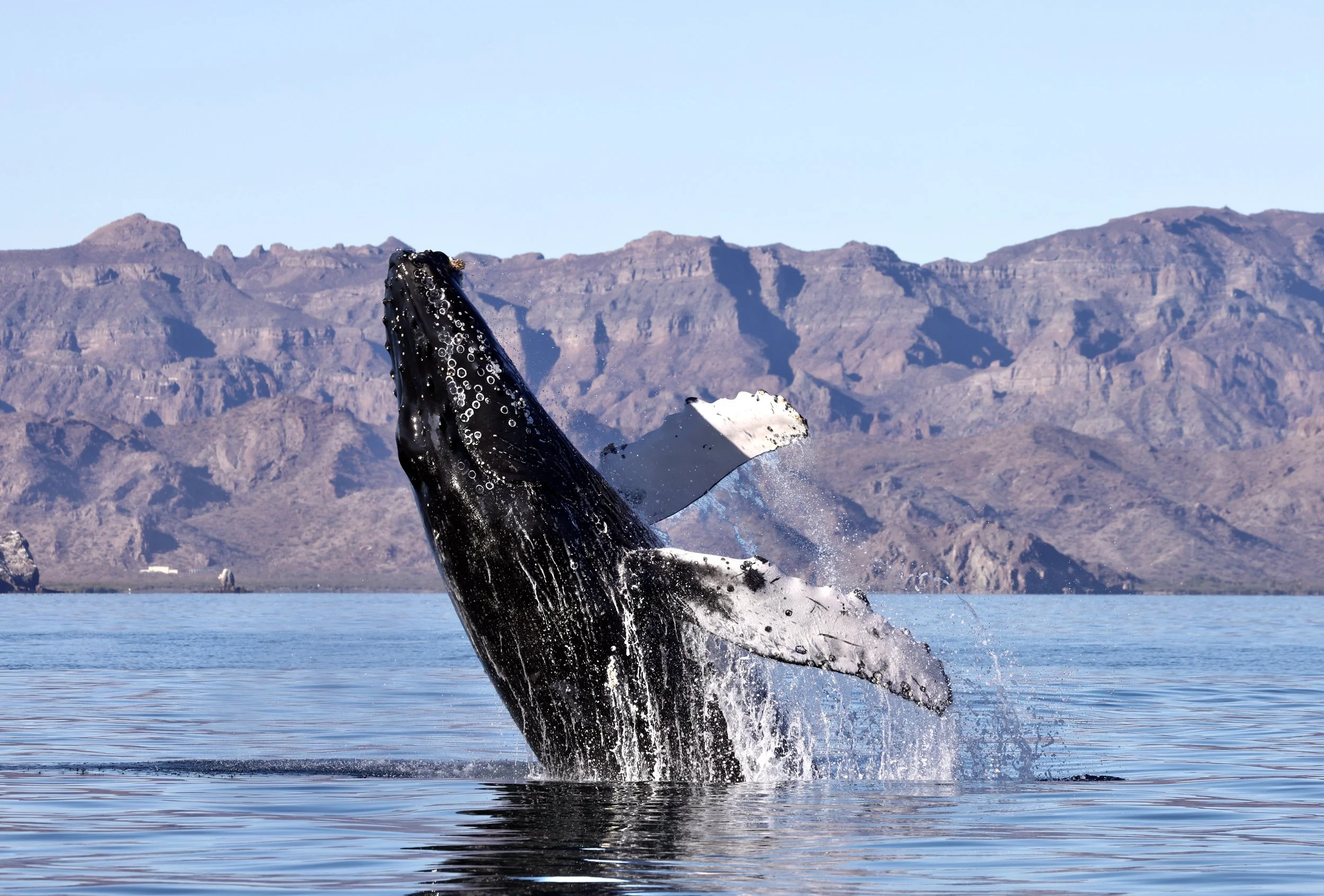
Photo of a humpback whale breaching in Loreto by Regina Domingo, during a winter 2026 whale-watching citizen science regenerative tourism expedition.
Whales play critical ecological roles by cycling nutrients, supporting marine productivity, and contributing to the balance of marine food webs. Protecting whales therefore helps protect the broader ecosystem, from plankton and fish populations to seabirds and coastal biodiversity.
At Nakawe Project and Baja Adventures, participants actively contribute to citizen science by collecting critical cetacean distribution data, including sightings, photo-identification, movement tracks, hydrophone recordings, behaviors, and habitat use. Our expeditions follow a strict non-intrusive approach: we never touch, chase, or surround whales, ensuring their natural behavior is fully respected.
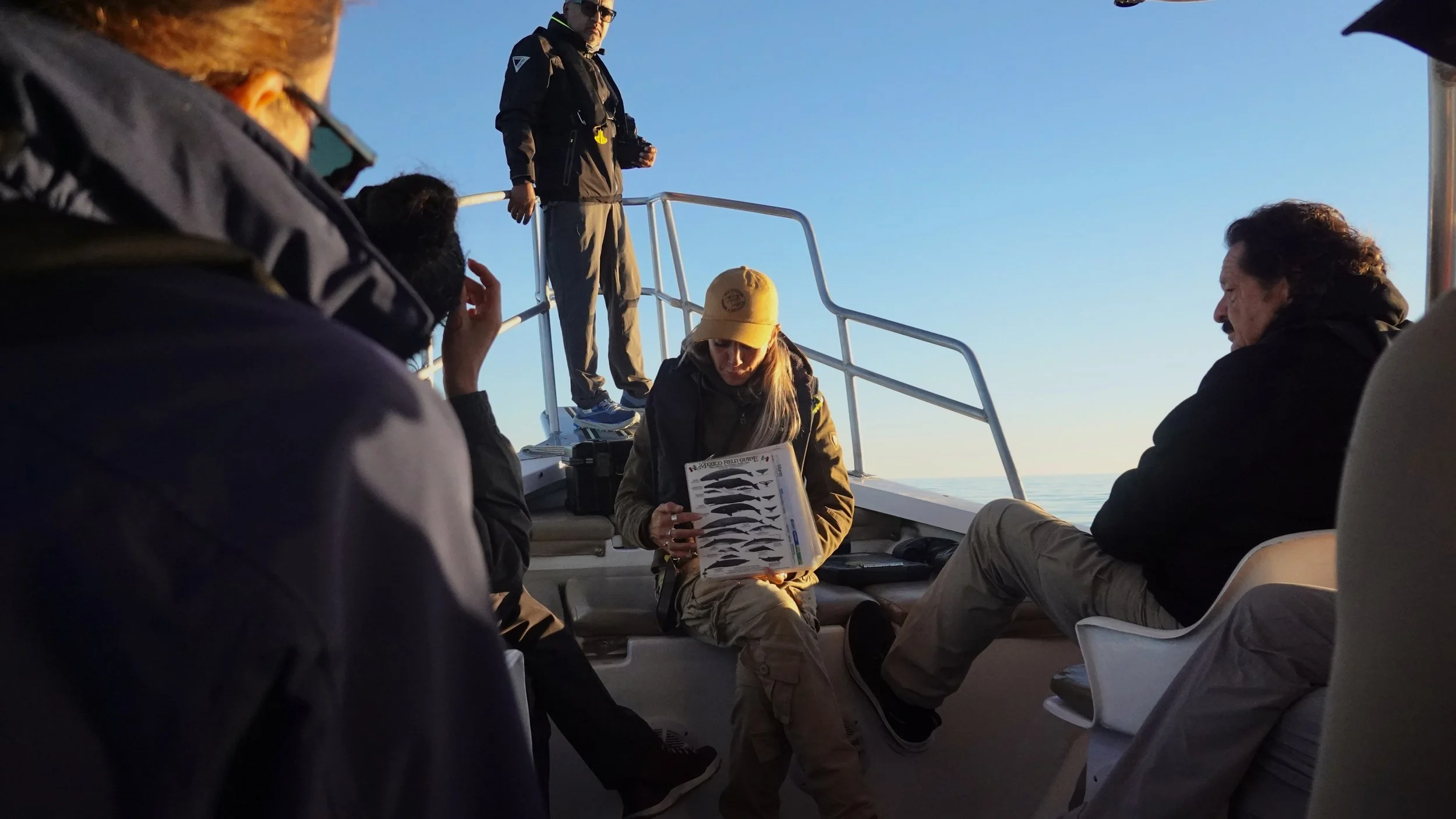
Whale watching regenerative tourism expedition at Baja Adventures.
Loreto is not simply a whale watching destination. It is a globally significant marine refuge and one of the most biologically important ecosystems in the Gulf of California. Protecting it requires science-based conservation, ethical tourism, and long-term ecological monitoring.
Passive whale watching is not only a better way to experience whales — it is part of a broader commitment to protecting the health and future of the entire ecosystem.
