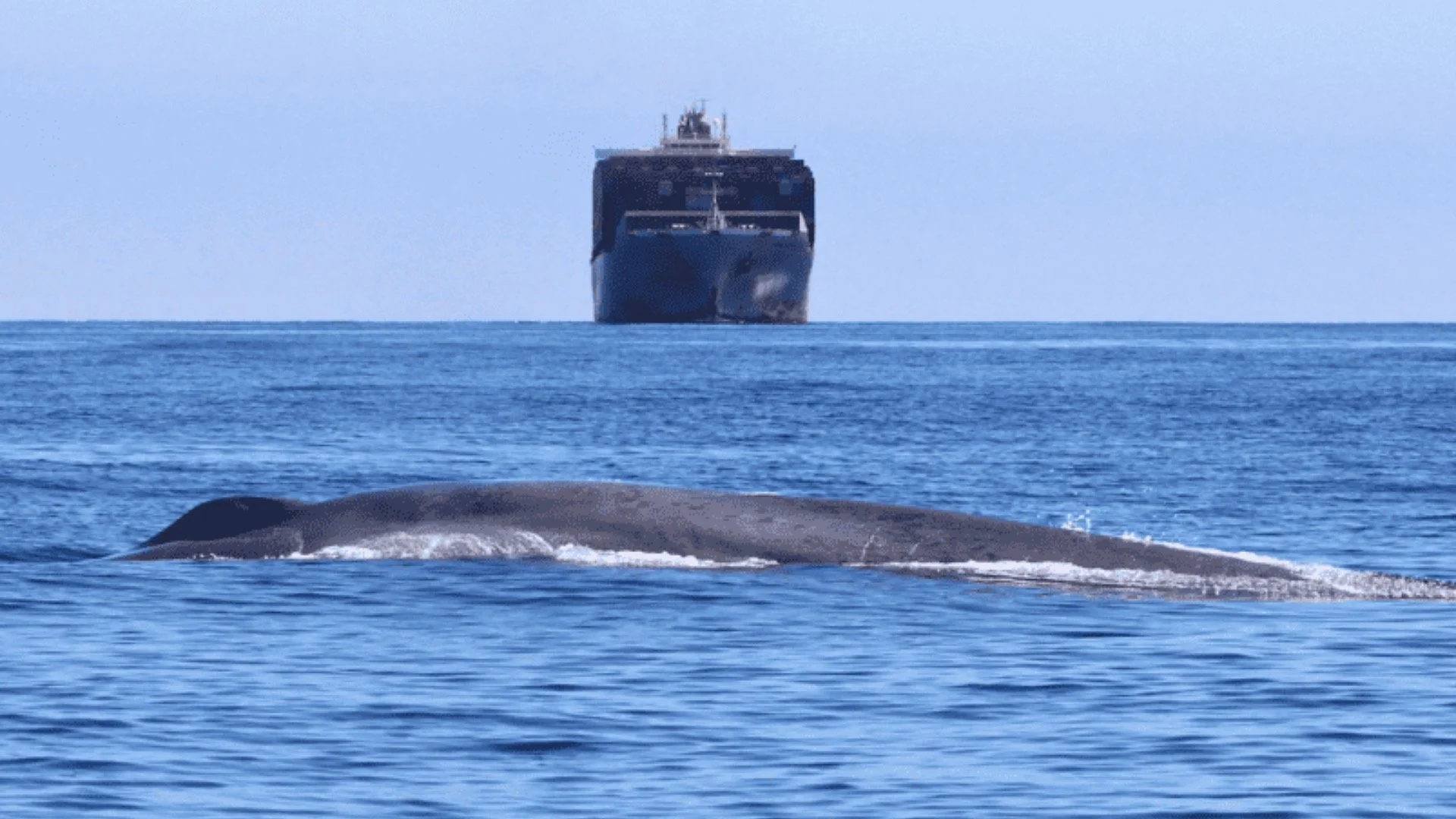
A decree from President Claudia Sheinbaum designates Loreto Bay National Park as a deep-sea port
MEXICO DESIGNATES LORETO AS INTERNATIONAL PORT OF HEIGHT AND CABOTAGE
On April 10, 2026, the Mexican federal government reclassified the Port of Loreto as a “Deep-sea port and Cabotage,” enabling large-scale international maritime traffic, including cruise ships.
This decision omits a legally decisive fact: the port is located within the Parque Nacional Bahía de Loreto, a federally protected Natural Area and part of the Islands and Protected Areas of the Gulf of California.
Under the UNESCO World Heritage Convention, Mexico is obligated to ensure the protection, conservation, and integrity of this site. Any project that may affect its ecological balance requires prior environmental impact assessments, cumulative analysis, and transparent public consultation.
None of these legal safeguards have been demonstrated.
The area is a critical habitat for protected species such as the endangered blue whale. Increased heavy vessel traffic introduces well-documented risks: underwater noise pollution, contamination, and vessel strikes, impacts incompatible with conservation obligations.
International precedent reinforces this risk. Cases involving Carnival Corporation show that even under regulatory frameworks, large-scale cruise operations have incurred repeated environmental violations.
At the national level, this raises serious concerns regarding compliance with environmental law, including the precautionary principle and the legal regime governing Natural Protected Areas.
Equally concerning is the absence of prior, informed public consultation.
Loreto is responding.
Local cooperatives and maritime operators are initiating:
• Legal review of the decree
• Demands for binding public consultation
• Requests for full environmental, social, and economic impact disclosure
• Coordinated civic and legal action
This is not opposition to development.
It is a defense of legality, biodiversity, and long-term sustainability.
A World Heritage Site imposes legal obligations, not discretionary use.
READ THE OFFICIAL DECREE PUBLISHED IN THE DIARIO OFICIAL DE LA FEDERACIÓN ON APRIL 10, 2026